


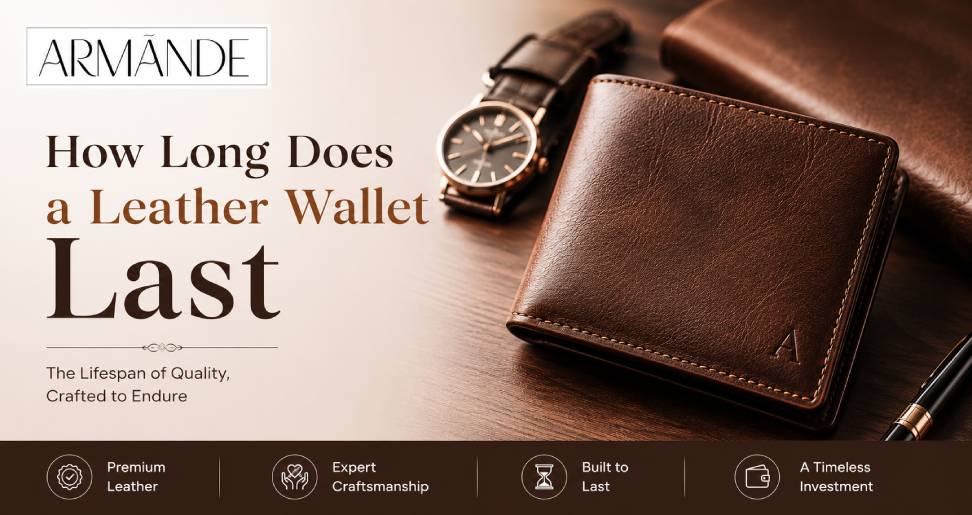
A leather wallet is more than just a place to store cash and cards. It is an everyday essential that reflects your personal style while offering long-term functionality. Whether you’re purchasing your first leather wallet or planning to replace an old one, one of the most common questions is: How long does a leather wallet last?
The answer depends on several factors, including the quality of the leather, craftsmanship, frequency of use, and how well the wallet is maintained. A high-quality leather wallet can easily last between 5 and 20 years, and premium full-grain leather wallets often last even longer with proper care.
In this guide, we’ll explain what determines a leather wallet’s lifespan, how to extend its durability, and why investing in a premium leather wallet is worth every penny.
Average Lifespan of a Leather Wallet
The lifespan of a leather wallet varies according to the type of leather and the manufacturing quality.
- Genuine Leather: Typically lasts 3–5 years with regular use.
- Top-Grain Leather: Usually lasts between 5–10 years.
- Full-Grain Leather: Can last 10–20 years or even longer with proper maintenance.
Unlike synthetic wallets, genuine leather develops a rich patina over time, making it more attractive as it ages rather than wearing out quickly.
Factors That Affect How Long a Leather Wallet Lasts
1. Quality of the Leather
The quality of leather is the biggest factor in determining durability.
Full-grain leather is the strongest and most durable because it retains the natural grain of the hide. It resists tearing and develops character with age. Lower-quality leather may look similar initially but often cracks, peels, or loses its appearance after a few years.
Choosing premium leather ensures your wallet remains attractive and functional for many years.
2. Craftsmanship
Even the best leather won’t last if it’s poorly stitched.
Look for wallets with:
- Reinforced stitching
- Smooth finished edges
- Strong interior lining
- Durable card slots
Quality craftsmanship prevents loose threads and structural damage during daily use.
3. Daily Usage
A wallet carried every day naturally experiences more wear than one used occasionally.
Common causes of wear include:
- Sitting on an overstuffed wallet
- Constant friction inside pockets
- Exposure to moisture
- Frequent opening and closing
Keeping only essential cards and avoiding unnecessary bulk reduces stress on the leather.
4. Environmental Conditions
Leather is a natural material that reacts to its surroundings.
Excessive heat can dry it out, while prolonged moisture can lead to stains or mold. Storing your wallet in a cool, dry place helps preserve its texture and appearance.
Signs That Your Leather Wallet Is Aging
Leather wallets naturally change over time. Some changes enhance their beauty, while others indicate it’s time for replacement.
Normal aging includes:
- Softer texture
- Richer color
- Natural patina
- Minor creases
Signs of excessive wear include:
- Deep cracks
- Torn stitching
- Loose card slots
- Peeling leather
- Broken edges
If your wallet still functions well and only shows cosmetic aging, it likely has many years of life remaining.
How to Make Your Leather Wallet Last Longer
Proper care significantly extends the lifespan of your wallet.
Avoid Overstuffing
Stuffing too many cards, receipts, and cash stretches the leather permanently. A slimmer wallet maintains its original shape much longer.
Clean It Regularly
Use a soft microfiber cloth to remove dust and dirt.
For deeper cleaning:
- Use a leather cleaner specifically designed for natural leather.
- Avoid harsh household cleaners.
- Never soak the wallet in water.
Cleaning every few months keeps the leather healthy.
Condition the Leather
Leather naturally loses moisture over time.
Applying a leather conditioner every 6–12 months:
- Prevents cracking
- Restores flexibility
- Maintains softness
- Preserves the finish
Always test conditioner on a small hidden area first.
Keep It Dry
If your wallet gets wet:
- Gently blot with a soft towel.
- Allow it to air dry naturally.
- Avoid direct sunlight or hair dryers.
Heat can damage leather fibers permanently.
Store It Properly
When not using your wallet:
- Keep it in a dust bag or soft pouch.
- Store it away from direct sunlight.
- Avoid humid environments.
Proper storage prevents unnecessary wear.
Is Buying a Premium Leather Wallet Worth It?
Many people hesitate when comparing premium leather wallets with inexpensive alternatives.
Although premium wallets have a higher upfront cost, they usually offer much better value over time because they:
- Last significantly longer
- Maintain their appearance
- Age beautifully
- Require fewer replacements
Instead of buying multiple low-quality wallets over several years, investing in one well-crafted leather wallet often proves more economical.
For anyone looking for durability, timeless style, and everyday practicality, the Premium Brown Leather Wallet from Armande Christopher is an excellent option. Crafted with premium-quality leather and attention to detail, it is designed to withstand daily use while developing the rich character that makes leather so appealing. Choosing a well-made wallet like this allows you to enjoy long-lasting performance without compromising on style.
Why Leather Wallets Age Better Than Synthetic Wallets
Synthetic wallets often crack, peel, or lose their finish after only a few years.
Leather behaves differently.
As natural fibers mature, they develop a unique patina that tells the story of everyday use. Small scratches blend into the surface, creating a distinctive appearance that many leather enthusiasts appreciate.
This aging process is one reason leather remains a preferred material despite the availability of cheaper alternatives.
When Should You Replace a Leather Wallet?
Even the highest-quality wallet won’t last forever.
Consider replacing your wallet if:
- Stitching has completely failed.
- Card slots no longer hold cards securely.
- The leather has cracked through multiple layers.
- Structural damage affects daily use.
- Repairs cost nearly as much as a new wallet.
If your wallet still functions properly and only shows natural aging, there is usually no need to replace it.
Final Thoughts
So, how long does a leather wallet last? The answer depends on the quality of materials, craftsmanship, usage, and maintenance. While lower-quality leather wallets may last only a few years, a premium full-grain leather wallet can remain reliable for well over a decade.
Regular cleaning, proper storage, and occasional conditioning go a long way in preserving its appearance and durability. Investing in a well-crafted wallet also reduces long-term replacement costs while giving you an accessory that only becomes more attractive with age.
If you’re ready to invest in lasting quality, the Premium Brown Leather Wallet from Armande Christopher offers a combination of timeless design, premium craftsmanship, and durability that makes it an excellent choice for everyday use. Rather than replacing worn-out wallets every few years, choosing a high-quality leather wallet today can provide years of dependable performance and classic style
