

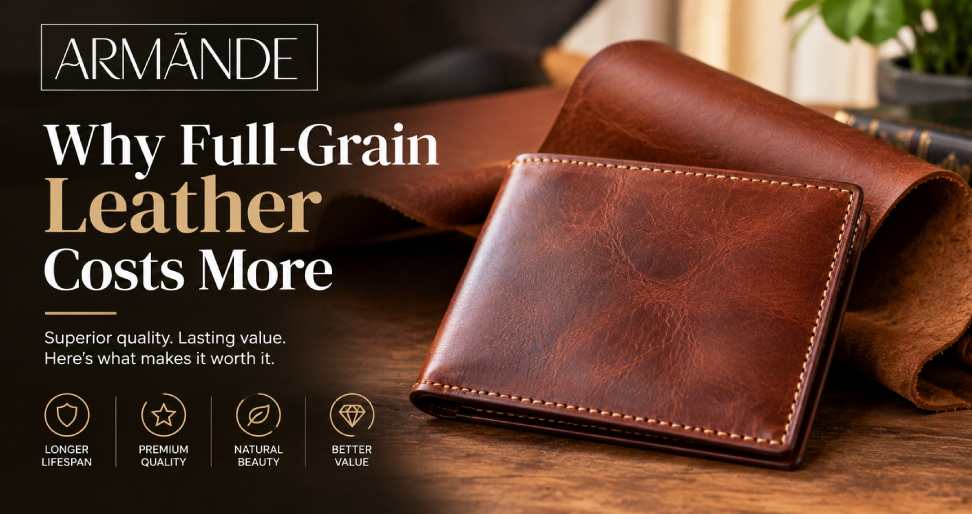
When shopping for a leather wallet, bag, belt, or accessory, you may notice a significant difference in prices between products that simply claim to be made from “leather.” One of the biggest reasons for this price difference is the type and quality of leather used.
Among the various leather grades, full-grain leather is widely regarded as a premium choice. It is durable, develops a distinctive character over time, and retains much of the natural grain and texture of the original hide. These qualities make full-grain leather more expensive than heavily processed leather alternatives.
But what exactly makes it cost more? Understanding the production process, material quality, durability, and craftsmanship can help explain why premium leather products command a higher price.
What Is Full-Grain Leather?
Full-grain leather comes from the outermost layer of an animal hide and retains the natural grain surface. Unlike heavily corrected leather, the surface is generally not extensively sanded or buffed to remove natural markings.
Small variations, pores, scars, and grain patterns can therefore remain visible. Rather than being imperfections, these characteristics can make each piece of leather look unique.
The natural surface also contributes to the material’s distinctive appearance and its ability to develop a patina—a gradual change in colour and character caused by handling, exposure, and everyday use.
1. It Uses the Natural Grain of the Hide
One major reason full-grain leather costs more is that manufacturers preserve the hide’s natural grain.
Producing highly corrected leather may involve processes that alter the surface considerably. Full-grain leather, by contrast, generally requires careful selection because natural markings remain part of the finished material.
This means manufacturers cannot simply rely on extensive surface correction to create a uniform appearance. Selecting suitable hides and working with their natural characteristics requires greater attention during production.
For consumers, the result is a material with an authentic texture and appearance.
2. High-Quality Hides Are More Selective
Not every hide is suitable for producing premium full-grain leather products.
The hide must have a surface that can be used with minimal correction while still delivering an attractive final appearance. This makes material selection an important part of the manufacturing process.
Higher-quality raw material can increase production costs from the beginning. When a manufacturer combines carefully selected hides with skilled craftsmanship, the final product naturally tends to cost more.
This is one reason comparing leather products purely by appearance can be misleading. Two wallets may look similar when new but can contain very different materials.
3. Full-Grain Leather Can Be Extremely Durable
Durability is another important factor behind the price of full-grain leather.
Because the natural grain structure is preserved, quality full-grain leather can provide excellent resistance to everyday wear when properly cared for. A wallet made from good-quality leather may withstand frequent handling, storage in pockets, and repeated opening and closing for years.
However, durability also depends on factors such as hide quality, thickness, tanning method, stitching, construction, and maintenance. “Full-grain” alone should not be treated as a guarantee that every product is identical.
A well-made full-grain leather product combines quality material with reliable construction.
4. It Develops a Unique Patina
One of the most appealing characteristics of full-grain leather is its ability to develop a patina.
A patina is the gradual transformation of leather’s colour, texture, and visual character through use. Oils from your hands, exposure to the environment, and regular handling can contribute to this change.
Instead of looking worn out immediately, quality leather can become more distinctive as it ages.
This is particularly attractive for products such as wallets. A new wallet may have a relatively uniform appearance, while a well-used leather wallet can eventually develop subtle variations that reflect its owner’s daily use.
5. Skilled Craftsmanship Adds to the Price
The cost of a leather product is not determined by the material alone.
Craftsmanship plays an important role, particularly for premium accessories. Cutting, folding, stitching, edge finishing, lining, hardware installation, and quality inspection all require time and skill.
A carefully constructed wallet can have cleaner edges, stronger stitching, better proportions, and more consistent finishing.
Brands that focus on craftsmanship may therefore charge more because customers are paying for both the leather and the work required to transform that material into a functional product.
6. Full-Grain Leather Offers Long-Term Value
A low-priced product can sometimes appear economical at first, but the purchase price does not always tell the whole story.
If an inexpensive wallet needs to be replaced frequently because of damaged edges, broken stitching, or deteriorating material, repeated purchases can add up.
A well-made full-grain leather accessory may have a higher initial price but can potentially remain useful for a much longer period when properly maintained.
This is why many buyers view premium leather products as long-term purchases rather than disposable accessories.
7. Natural Variations Make Every Product Different
Uniformity is often easier to achieve when leather has been heavily processed.
Full-grain leather retains more of the natural characteristics of the original hide. Consequently, two products made from the same type of leather may not look completely identical.
For many buyers, this is part of the appeal.
A natural grain pattern, subtle colour variation, or small mark can give a wallet an individual character. Instead of expecting every product to look factory-perfect, buyers can appreciate these differences as evidence of the natural material.
Full-Grain vs. Other Leather Types
Leather terminology can sometimes be confusing because different grades and finishes are used across the market.
Full-grain leather generally retains the natural grain surface. Top-grain leather is also high-quality but may undergo more surface correction. Genuine leather is a broad term that does not necessarily indicate a specific quality level, while bonded leather is manufactured using leather fibres or remnants combined with other materials.
Therefore, buyers should look beyond labels and consider the product’s construction, material description, stitching, finishing, and brand reputation.
How to Care for Full-Grain Leather
A premium leather product still requires proper care.
Keep leather away from excessive moisture and avoid exposing it unnecessarily to harsh chemicals. Store your wallet or accessory in a dry environment and clean it gently when needed.
Using a suitable leather conditioner occasionally may also help maintain the material, but always follow the manufacturer’s recommendations because different finishes can require different care.
Most importantly, avoid over-conditioning. Leather does not necessarily need frequent treatment to remain attractive.
Why GETARMANDE Focuses on Leather Quality
For buyers searching for thoughtfully made leather accessories, GETARMANDE focuses on products designed around the appeal of genuine leather and practical everyday use.
A leather wallet is more than a place to carry cards and cash. It is an accessory that can become part of your daily routine. Choosing a quality material can therefore make a difference in how the wallet feels, looks, and ages over time.
Whether you are searching for a personalised men’s wallet, a sophisticated everyday accessory, or a thoughtful leather gift, GETARMANDE offers options for buyers who appreciate the combination of style and functionality.
The appeal of premium leather is not simply its appearance when it is new. Its value comes from the material, craftsmanship, durability, and character it can develop through years of use.
Final Thoughts
Full-grain leather costs more because several factors contribute to its overall value. The natural grain is preserved, quality hides require careful selection, manufacturing demands skilled craftsmanship, and a well-made product can offer impressive durability and a distinctive appearance over time.
While a higher price does not automatically mean that every full-grain leather product is better, understanding what you are paying for can make the purchasing decision easier.
For people who prefer products designed to be used and appreciated for years rather than replaced frequently, quality leather can be an appealing investment. And as the material develops its own character through everyday use, a well-made leather accessory can become increasingly personal rather than simply becoming old.
