

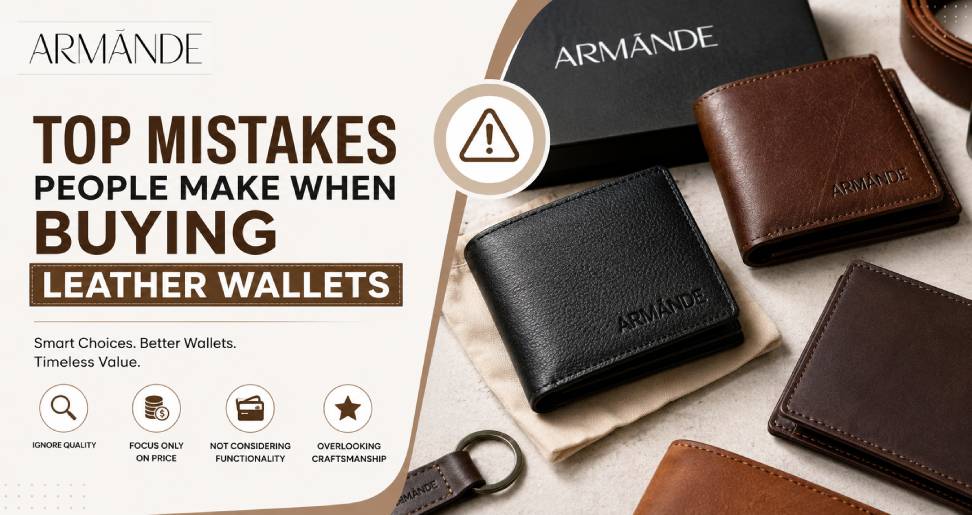
A leather wallet is more than just a place to keep cash and cards. It is an everyday accessory that can influence your comfort, style, and convenience. Because wallets are handled frequently and exposed to constant friction, bending, and pressure, choosing the right one matters. Yet many buyers focus only on appearance or price and overlook important factors such as leather quality, construction, size, and functionality.
Understanding the common mistakes people make when buying leather wallets can help you make a smarter purchase and choose a wallet that looks good while standing up to everyday use.
1. Assuming Every “Leather” Wallet Is High Quality
One of the biggest mistakes is believing that the word “leather” automatically means premium quality. Leather comes in different grades and finishes, and their durability and appearance can vary considerably.
Full-grain leather retains the natural surface of the hide and is generally regarded as the most durable grade. Top-grain leather is also a quality option but has usually undergone some surface processing. Terms such as “genuine leather” confirm that a product contains leather but do not, by themselves, indicate premium quality.
Before buying, check the product description carefully instead of relying only on the word “leather.”
2. Choosing a Wallet Only Because It Looks Attractive
A stylish wallet may catch your attention immediately, but appearance should not be the only deciding factor. A wallet can look excellent in photographs yet be inconvenient for everyday use.
Think about how you normally carry your essentials. Do you carry several cards, cash, identification, coins, or receipts? A minimalist card holder may be ideal for someone carrying only a few cards, while a bifold or larger wallet may be more practical for someone who regularly carries cash and multiple cards.
The best wallet is one that combines your preferred appearance with your actual daily requirements.
3. Ignoring the Stitching and Overall Construction
Leather quality alone does not determine how long a wallet will last. Construction is equally important. Loose threads, uneven stitching, poorly finished edges, and misaligned compartments can indicate weak workmanship.
When inspecting a wallet, look closely at the stitching around card slots, folds, corners, and other areas that experience regular stress. High-quality construction typically features neat, consistent stitching and properly finished edges.
If you are shopping online, zoom in on product photographs and read reviews that specifically mention stitching and durability.
4. Buying a Wallet That Is Too Small or Too Large
Another common mistake is choosing wallet dimensions based solely on appearance.
A wallet that is too small may force you to squeeze cards or fold currency unnecessarily. On the other hand, a wallet with excessive compartments can become bulky and uncomfortable, particularly when carried in a trouser pocket.
Before purchasing, make a quick inventory of what you actually carry. Many buyers need only a handful of frequently used cards, while others require additional space for identification, cash, or coins. Selecting the right capacity helps prevent unnecessary bulk.
5. Overlooking the Number and Design of Card Slots
The number of card slots is important, but their layout matters just as much. A wallet with numerous slots may seem attractive, but unused compartments can encourage overloading.
Too many cards packed into a wallet can stretch the leather, distort its shape, and put additional pressure on stitching. A better approach is to select a wallet with enough dedicated storage for the cards you regularly use.
A thoughtful internal layout can make cards easier to access without making the wallet unnecessarily thick.
6. Buying the Cheapest Option Without Checking What You Get
Price is an important consideration, but choosing solely according to the lowest price can become expensive over time.
Very inexpensive wallets may use lower-grade materials, weak construction, or synthetic components that do not provide the durability expected from quality leather goods. Instead of asking, “What is the cheapest wallet I can buy?”, consider asking, “What quality can I get for my budget?”
Compare the leather specification, stitching, compartments, finishing, warranty or return policy, and brand reputation before making your decision.
7. Ignoring RFID Protection When It Matters to You
RFID protection has become a popular feature in modern wallets. If you regularly carry contactless payment cards, an RFID-blocking wallet may be worth considering as an additional security feature.
However, RFID protection should not distract you from the fundamentals. A wallet should still have good leather, reliable stitching, appropriate storage, and a practical design. RFID is a feature—not a replacement for overall quality.
8. Forgetting About Comfort and Everyday Carry
A wallet may have excellent materials and attractive detailing but still be uncomfortable to carry.
Think about where you usually keep your wallet. If it goes into your front pocket, a slim design may be preferable. If you carry it inside a bag, you may have more flexibility regarding size.
Also consider how frequently you access your cards and cash. A practical layout can save time and prevent you from repeatedly pulling everything out just to find one card.
9. Not Checking the Wallet’s Finishing Details
Small details often reveal the quality of a leather wallet. Pay attention to the edges, corners, folds, lining, hardware, and symmetry.
A well-finished wallet should generally have clean edges, consistent panels, secure hardware, and neatly constructed compartments. Natural variations in leather grain should not automatically be considered defects; genuine leather can display subtle differences in texture and markings.
These details can make a noticeable difference in both appearance and longevity.
10. Buying Without Considering Long-Term Care
Even a well-made leather wallet needs reasonable care. Constant exposure to moisture, excessive heat, dirt, and overstuffing can affect its appearance and structure.
Avoid filling your wallet beyond its intended capacity. Keep it away from excessive heat and moisture, and clean it appropriately according to the leather type. With proper care, quality leather can develop a distinctive patina over time rather than simply looking worn out.
11. Choosing a Brand Without Researching Its Product Details
Brand reputation can be useful, but buyers should still examine the actual product specifications.
Look for clear information about the leather, dimensions, compartments, construction, return policy, and available features. Customer reviews can also help identify recurring concerns such as peeling, loose stitching, inaccurate dimensions, or insufficient storage.
A transparent product description gives you more confidence than vague claims such as “luxury,” “premium,” or “finest quality.”
How to Choose a Leather Wallet Without Regret
Before purchasing, consider these key questions:
- What type and grade of leather is being used?
- Does the wallet match the number of cards and cash I normally carry?
- Is the stitching neat and secure?
- Are the edges and corners properly finished?
- Is the wallet comfortable for my preferred carrying method?
- Do I need RFID protection?
- Is the price reasonable for the materials and construction?
- Does the brand provide clear product information and a suitable return policy?
Taking a few minutes to answer these questions can help you avoid an impulse purchase and select a wallet that fits your lifestyle.
Make Your Next Wallet Purchase More Thoughtful
Buying a leather wallet should not be based on looks or price alone. Leather quality, craftsmanship, storage capacity, comfort, security features, and long-term care all play a role in determining whether a wallet is genuinely worth purchasing.
If you are looking for thoughtfully designed leather accessories, explore GETARMANDE for wallet options that can complement everyday use and gifting occasions.
The right wallet should feel practical from the first day and continue looking better as it becomes part of your everyday routine. By avoiding these common buying mistakes and paying attention to the details that truly matter, you can make a more informed investment in a leather wallet that combines functionality, durability, and personal style.
